Browse Registry Lookup Archives for 3394554732, 3882405663, 3393511170, 3289692828, 3494697739

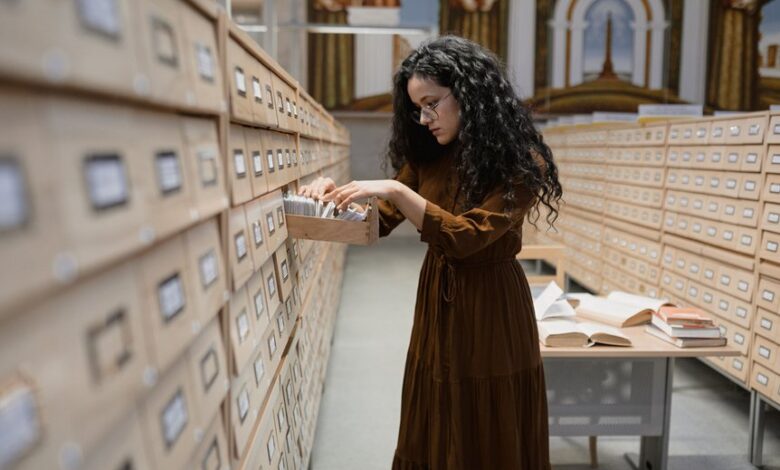
The browse registry lookup archives for the identifiers 3394554732, 3882405663, 3393511170, 3289692828, and 3494697739 invite a disciplined examination of provenance markers and access histories. Each entry encodes sequence, timestamp, and source validation, forming a traceable chain through archival formats. A methodical approach reveals patterns and deviations that affect reproducibility. The implications for researchers are precise: initial mappings matter, yet gaps may require alternative cross-checks to preserve integrity as the sequence unfolds.
What the Browse Registry Lookup Archives Reveal
The Browse Registry Lookup Archives reveal patterns in how registry queries have evolved, illustrating recurring search behaviors, data formats, and frequency of access across time.
The records emphasize decoding identifiers and provenance validation as core activities, supporting disciplined assessment.
This archival lens documents methodological shifts, establishes traceable relevance, and underscores the balance between accessibility and verification in registry usage.
How to Decode the Archive Identifiers (3394554732, 3882405663, 3393511170, 3289692828, 3494697739)
Registries encode archive identifiers as structured tokens that encode provenance and access history; decoding these requires a disciplined approach to mapping numeric IDs to their corresponding records and contextual metadata.
The process emphasizes decoding identifiers and provenance validation, applying consistent rules to reconstruct provenance lines, verify sequence integrity, and contextualize each entry within the archival framework for clear, retiree-free interpretation.
Tracing Provenance: Practical Steps to Validate Registry Entries
Tracing provenance in registry entries hinges on a disciplined, stepwise validation process: practitioners verify source, timestamp, and sequence integrity by cross-referencing identifiers with canonical records, then reconstruct provenance lines to ensure consistent lineage and auditable history. This approach acknowledges harvesting metadata practices and archival gaps, documenting decisions, justifying deviations, and preserving reproducible trails for independent verification and future inquiry.
Patterns, Pitfalls, and Proven Tips for Researchers Exploring Historical Lookups
Historical lookups solicit a careful synthesis of pattern recognition, known pitfalls, and practical techniques that researchers can apply across diverse registry datasets. This study dissects methodological caveats, emphasizes disciplined data governance, and advocates disciplined citation standards. Researchers should chart provenance, verify controls, and document assumptions. The approach favors autonomous inquiry, transparent methodologies, and scalable strategies that support rigorous, freedom-oriented scholarly exploration of historical lookups.
Conclusion
In sum, the browse registry lookup archives reveal a disciplined sequence of identifiers, metadata validation, and provenance checks that underwrite reproducible tracing. A single misread timestamp can cascade into misattributed records, underscoring the need for exact cross-referencing. For researchers, each lookup functions like a carefully cataloged breadcrumb: a fixed point, a verified path, and a remembered correction. When an anomaly appears, the archivist’s methodical note preserves the trail, preserving integrity for future inquiries.